Hinweis: Dieser Blogbeitrag, sowie das zugehörige PAC & Tallence Point-of-View Paper sind nur in englischer Sprache verfügbar.
Chief Transformation Officer
The Challenge Is Execution
Highlights // Tallence Editorial Team // 06.07.2026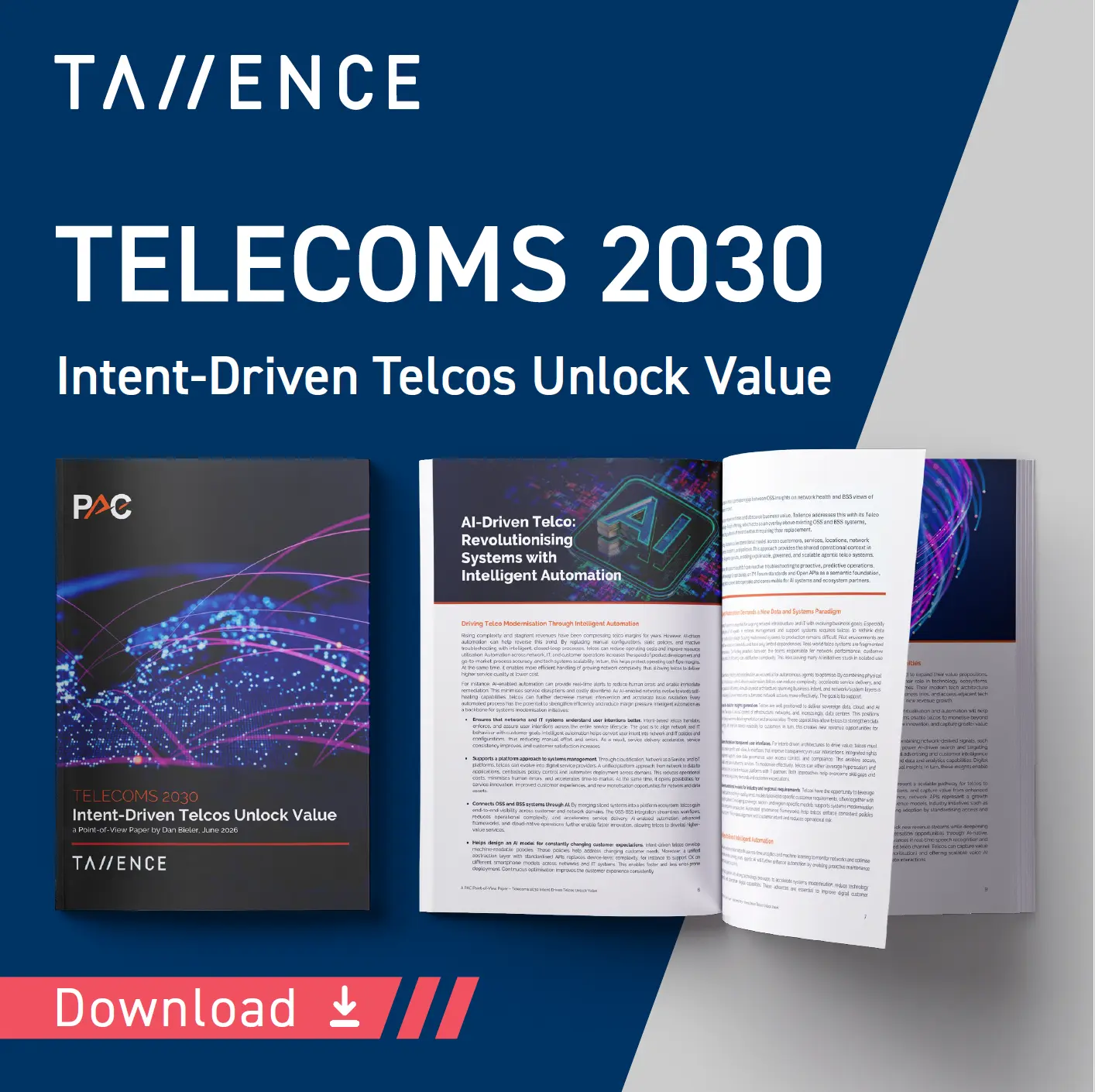
Hinweis: Dieser Blogbeitrag, sowie das zugehörige PAC & Tallence Point-of-View Paper sind nur in englischer Sprache verfügbar.
Walking through the halls of DTW Ignite 2026 in Copenhagen, one thing became increasingly clear:
The telecom industry is moving beyond vision statements.
For years, industry conversations were dominated by cloud, AI, automation and digital transformation. This year felt different.
Across keynote sessions, Catalyst projects and customer conversations, the focus shifted from what is possible to what is working.
AI-native operations.
Composable IT.
Autonomous networks.
Open ecosystems.
New monetisation models beyond connectivity.
These are no longer future concepts. They are becoming implementation priorities.
But beneath all the technology discussions, one message stood out:
The biggest challenge facing operators today is not innovation.
It is execution.
Most operators already know the strategic direction.
They need to modernise OSS and BSS environments.
They need AI-ready data foundations.
They need more automation across operations.
They need to simplify complex architectures.
They need to create new revenue streams beyond connectivity.
The question is no longer whether transformation is needed.
The question is how to make transformation work at scale.
And that is where many operators face the real challenge.
Legacy platforms, fragmented data, disconnected operational domains and siloed ownership structures continue to slow down progress. They increase cost, reduce transparency and make it harder to turn ambitious AI and automation strategies into measurable business outcomes.
This is exactly the challenge we explore in our new PAC & Tallence Point-of-View Paper:
Telecoms 2030: Intent-Driven Telcos Unlock Value.
The paper looks at how telecom operators can move from transformation ambition to execution-ready operating models.
AI was one of the dominant themes at DTW.
But the strongest conversations were not about isolated AI experiments. They were about operationalising AI in real telco environments.
That changes the discussion.
AI can only be as effective as the environment in which it operates.
Without connected data, shared context, transparent processes and modernised system architectures, AI remains trapped in isolated use cases. It may create local efficiency, but it will not transform the operating model.
This is why topics such as data products, telecom ontologies, knowledge-driven architectures, semantic models and governed automation are becoming increasingly important.
The challenge is not simply building intelligent systems.
The challenge is creating the foundations that allow intelligence to scale safely, transparently and commercially.
This is where the concept of the Intent-Driven Telco becomes highly relevant.
An Intent-Driven Telco does not simply automate existing processes. It creates a direct connection between business objectives, operational decisions and technology execution.
Instead of asking:
“How do we deploy more technology?”
the question becomes:
“How do we continuously translate business intent into operational outcomes?”
That shift has major implications for telecom leaders.
It affects OSS and BSS modernisation.
It changes the role of data strategy.
It reshapes AI adoption.
It requires new levels of operational transparency.
It impacts monetisation models.
And it demands a more coherent connection between architecture, processes, platforms and customer value.
For telcos, this is not a purely technical transformation. It is a strategic execution challenge.
Another major theme at DTW was growth.
Efficiency remains critical. But efficiency alone will not define telecom success over the next decade.
Operators are increasingly exploring how network capabilities, APIs, AI-enabled services and ecosystem participation can create new sources of value.
The strategic question is shifting from monetising connectivity alone to monetising intelligence, context and outcomes.
That includes opportunities around network APIs, AI-native services, data-driven propositions, smart voice services and context-aware enterprise offerings.
But these opportunities require more than new product ideas.
They require modern, flexible and interoperable technology foundations. They require operational agility. And they require the ability to connect network, IT, customer and partner domains in a more intelligent way.
This is where execution becomes decisive.
If DTW Ignite 2026 demonstrated anything, it is this:
The telecom industry has entered an execution phase.
Technology remains critical. But the operators that succeed will not necessarily be those with the most ambitious AI strategy.
They will be those that can connect strategy, architecture, data and operations into a coherent transformation journey.
Together with PAC, we explore this shift in our latest Point-of-View Paper:
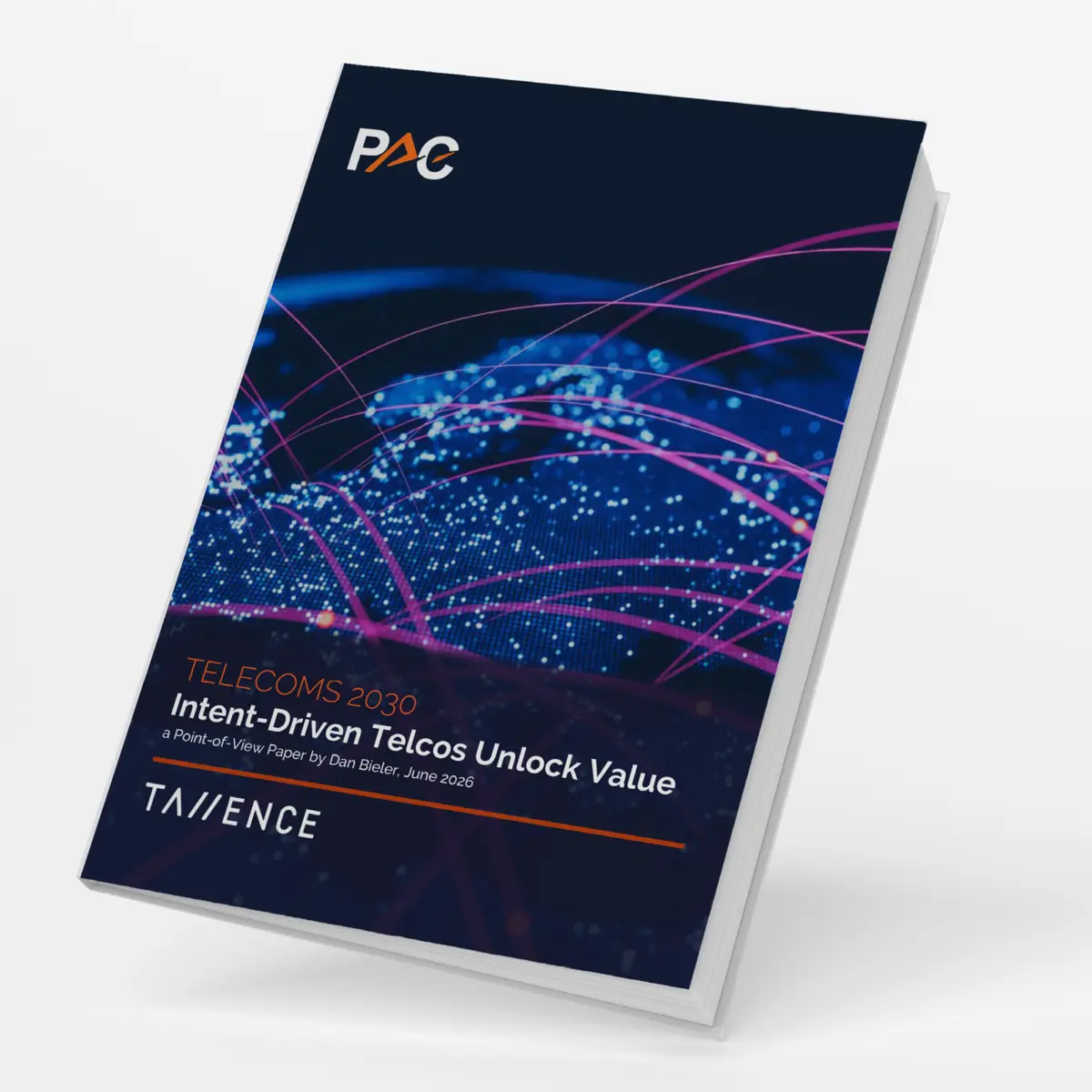
The paper examines:
Download the PAC & Tallence Point-of-View Paper and explore how leading operators can turn intent-driven strategies into measurable operational and commercial outcomes.

// Kontakt
Christian Schöntag
The ideas outlined in this article are only the beginning. Whether you're planning an OSS/BSS transformation, operationalising AI or exploring new revenue models beyond connectivity, our telecom experts are ready to help you translate strategy into execution.